There is a specific kind of silence that follows a disaster. It is not a peaceful quiet, but a heavy, suffocating blanket that falls over a community when the unthinkable has happened. Recently, in a small, rural valley in Montana, that silence descended during a homecoming parade. The floats were moving, the candy was flying, and the town was cheering. Then, in a singular, horrific instant, a twelve-year-old boy from the football team was accidentally run over. He died in front of everyone….. his friends, his teachers, his neighbors.
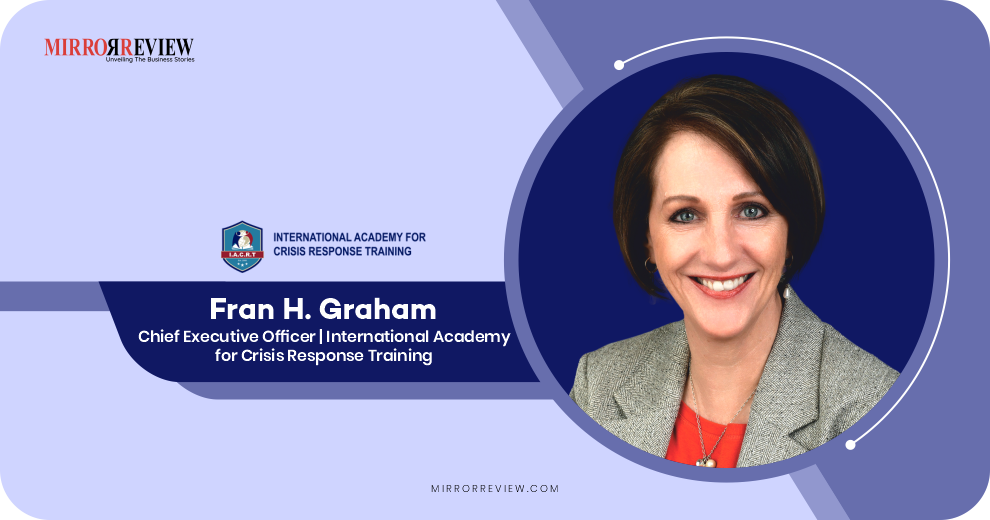
In the chaotic aftermath, when the sirens faded and the shock set in, the community needed more than just logistics; they needed a way to breathe again. Into this void stepped Fran H. Graham. She didn’t arrive with a medical kit or a police badge, although she has worn the uniform of the latter. She arrived with a skillset that is both ancient and urgently modern. She sat with the first responders, who said it was the worst scene they had ever worked. She walked the halls of the school, comforting nine to thirteen-year-olds who had seen their friend die. And still, weeks later, after the initial wave of support has receded, she sits with the family, a quiet anchor in their sea of grief.
Fran is the Founder of Fran H Graham, doing business as RESURGAM, and the Chief Executive Officer at the International Academy for Crisis Response Training. She is an international crisis response and trauma specialist, a chaplain, an author, and a teacher. But titles, in Fran’s world, are secondary to the mission. She is a woman who believes that trauma is an injury, not a life sentence, and that the tools to heal it should be as common as CPR. She is a former British police officer who learned the hard way that you cannot serve others if you are broken yourself, and who has dedicated her life to ensuring that the people who run toward the fire have someone waiting for them when the smoke clears.
The Bobby and the Cup of Tea
Fran’s story begins thousands of miles from Montana, in the ordered, green landscape of Great Britain. Born in Zambia and raised in the UK, she comes from a lineage of protectors. Her father was a Royal Marine who became a police officer; her grandfather was a civil engineer in the British Army. She was raised on a farm in a community where volunteering wasn’t a resume builder; it was simply what you did. If a neighbor’s cow was in trouble, you went. You didn’t sit in your house with the curtains drawn.
This ethos led her to follow in her father’s footsteps. She became a police officer in England. It was a different time and a different world. She loved the job, not for the adrenaline of the blue lights wailing at 90 miles an hour, but for the moments after. She was the cop who, after taking the report of a horrific crime, would stay behind. She would look at the victim, see the hollowness in their eyes, and defy the efficient pace of policing to do something radical: she would make them a cup of tea.
“I just had such compassion for the victims of crime,” Fran says. She would often ask if they had someone to call. A few days later, even while off duty, she would return to check in on them. She understood, instinctively, that humans are wired for connection and that true healing often comes through relationships. Sometimes, the most powerful intervention is simply one person saying, “I’ve got you.”
But the job took its toll. In those days, the shift patterns were brutal….. a six-week rotating schedule that changed every single week, from early shifts to late shifts to night shifts. Fran’s body could never settle. She was raising four boys between the ages of five and ten, juggling a husband’s schedule, and trying to be a police officer on zero reserves.
Fran crashed. It was a complete mental, emotional, and physical breakdown. When she went to her sergeant, desperate and exhausted, admitting she wasn’t well, his response was the standard tough-love of the era: “Pull it together and get back to work.” She tried. She pushed through. And then she broke completely. She experienced burnout for six months, feeling isolated and ashamed, like a loser who had let the team down. Her employer stipulated that she must return to work after six months or forfeit her paycheck, as the police force’s sick pay policy only covered that duration. Needing the income, she resumed work, but it was too soon. She hadn’t fully recovered yet.
But being back in the high-pressure environment without fully understanding how to manage her symptoms or why she was still so exhausted caused her to begin to deteriorate again, ultimately leading to the loss of her career. It was the end of her life as she knew it, but it was the beginning of her life’s work.
The American Pivot
In 2002, Fran and her husband moved their family to the United States, settling in San Luis Obispo County, California, for a fresh start. She couldn’t be a cop anymore, but she couldn’t stop caring. She volunteered at the local police department, working in investigations and dispatch.
It was here that Fran saw the stark difference between the “Bobby on the beat” and the American law enforcement officer. In England, she hadn’t carried a gun. Here, officers were laden with vests, tasers, and firearms. The crimes were more violent in her new town compared to the quiet countryside of her British Beat; shootings were common. She looked at these officers and realized they were carrying a load she had never had to bear. She thought, “What can I do to support them? How can I position myself to be the person that I needed back in England?”
This question launched a passionate journey of intense education. From 2002 onwards, Fran took every class she could find on trauma management, emergency management and chaplaincy, including certifications in international response. Education is a huge part of what keeps her skills current, both for responding and also for training others. She became an ordained pastor, not to run a church, but because it was a prerequisite to serve as a chaplain for fire and police agencies.
By 2010, she had expanded into disaster relief, deploying to hurricanes, fires, tornadoes, mudslides, war, terrorist attacks, and mass shootings. Her skills and aptitude for staying calm in the chaos and leading well in emergencies, together with all of the education she’d done, opened doors for her to instruct others. She realized that she had found her niche. She was “on her X.”
Resurgam: The Motto in the Blood
The philosophy that drives Fran is etched into her history. Her Scottish father’s family clan has a crest, and on that crest is a Latin word: RESURGAM. It means “I shall rise again.”
For Fran, who had risen from the ashes of her own career-ending burnout, this was more than a motto; it was a mandate. She adopted it for her business but tweaked the message. It wasn’t just about her rising; it was about empowering others to do the same. “If I can rise again, you can too,” she says. “And I’m going to show you how to do it.”
This is the core of her work. She is not a therapist who tries to “fix” people. She is an educator who empowers them. She teaches that while we all have days where we want to pull the covers over our heads, we cannot stay there. Her goal is to give people the skills to pick themselves up, dust themselves off, and put one foot in front of the other so that they can “Rise Again” too.
This mission is delivered through two distinct channels. There is the volunteer side, RESURGAM, where Fran deploys and responds with teams or alone. She also trains community members, hospices, and local groups, sometimes for free, simply to build resilience in the population. And then there is the International Academy for Crisis Response Training, the professional arm that provides high-level certification for agencies that need it for liability and compliance.
The Professionalization of Peer Support
The Academy was born from a need for standardization. In the world of first responders, you cannot just have a well-meaning person show up to comfort a police officer who has just been involved in a shooting. You need a peer. You need someone who knows the culture, who understands the weight of the badge and the unique trauma of taking a life to save one.
Fran specializes in CISM (Critical Incident Stress Management), the industry standard developed in the 1970s. She has been a member of the San Luis Obispo County CISM team since 2010, and despite living in Montana, she remains their team instructor and consultant. She is also on three local crisis and peer support teams in Montana which she helped to develop and train. She trains Peer Support Teams across the country and internationally, ensuring that when a firefighter or a cop, or any other frontline responder has the worst day of their life, the person sitting next to them isn’t a stranger, but a trained colleague who “gets it.”
Her approach is unique because she doesn’t just hand out certificates and leave. She offers what she calls a “consultancy for free.” She becomes a lifelong resource. If a team she trained five years ago faces a complex tragedy, they can email her. “Fran, this happened. This is what we’re thinking of doing. Is that correct?” And she will guide them, sometimes telling them, “Your ideas are great, but that’s not the best thing to do for now.”
The Bath You Can’t Take Without Getting Wet
There is a cost to this work, which, according to Fran, is the most important lesson to learn first. Many of her courses are based on the truth that if you don’t understand how to be aware of your own unique reactions to stress and how to manage them, you’ll miss the warning signs, and that leads to burnout and breakdowns. You must learn that it’s ok to put yourself first, especially when caring for others. Fran has a phrase she uses to warn her students: “You cannot have a bath without getting wet.”
You cannot immerse yourself in the trauma of others without it touching you. It will cut you! It does hurt, so you need to know how to manage that pain in ways that bring healing through healthy choices rather than in ways that are unhealthy, leading to destruction.
She teaches the neuroscience of this. The brain, she explains, is a selfish organ, in a good way, because it is wired for survival. It cannot differentiate between reality and imagination, or between witnessing a tragedy and hearing a graphic story about one. When first responders “cathartically ventilate,” sharing the gruesome details of a scene to get the pain out, the listener’s brain paints pictures as the details of the story unfold. Those pictures stick, causing the listener to see them repeatedly, which in turn can cause a strong stress reaction if those images are traumatic ones, which may be so severe that the listener needs professional help to recover.
Fran knows this because she has lived it. She had two further major emotional crashes caused by burnout within 10 years following the crash that caused the loss of her career, moments where she missed the signs and pushed herself too far. Now, she is strict about her boundaries. She has two therapists (“one can’t handle me,” she jokes), and she actively practices the self-care she preaches. She schedules downtime. She refuses to watch horror movies or violent documentaries because she knows her brain doesn’t need any more trauma images.
Fran is fiercely protective of her students, too. When people want to join a crisis response team, her first question is, “How’s your self-care?” If they are not stable in their own lives, she tells them, “Now is not the time.”
A Vision for a Resilient World
Fran H. Graham is not slowing down. Her vision is expanding. She is currently setting up a non-profit to raise funds to subsidize training for underfunded clients, especially first responder agencies. Although the organization is in the final stages of establishment and will be officially launched within the next month or two, Fran invites those moved by this mission to prepare to support the cause once active. She wants money to never be the reason a first responder doesn’t get the support they need.
She dreams of a network of well-trained community-based teams across the entire U.S, civilians trained to respond to local tragedies like the Montana parade, filling the gap for families who cannot afford a therapist or who are on a waiting list. “We are now about 500,000 therapists short due to a severe drop in mental health and psychology students in recent years,” she notes, citing the chronic shortage of culturally competent trauma professionals. She feels the clock ticking.
She is also modernizing the delivery, moving toward online training with bite-sized video modules so people can learn in 90-minute increments without having to fly to a classroom. She is expanding her international work, having already served in Poland, Romania, and Ukraine following the Russian invasion, helping refugees and training locals.
It was here that Fran’s role as an author took on a desperate urgency. She realized that she could not be everywhere at once, so she sent her words instead. She had her book, “What To Do When Life Sucks,” which is a practical guide filled with self-help tools for navigating trauma, translated into Russian. She offered it as a free PDF, providing a digital lifeline to those whose lives had just been turned upside down.
Ultimately, Fran is building a machine that can run without her. She has a faculty of six instructors, all of whom are current or former first responders or military personnel with boots on the ground experience, so that when they teach others, they truly can relate to the students. She has a curricula that is being taught globally, and a legacy of empowered volunteers. She is the woman who learned that you cannot save everyone, but you can teach everyone how to save themselves.
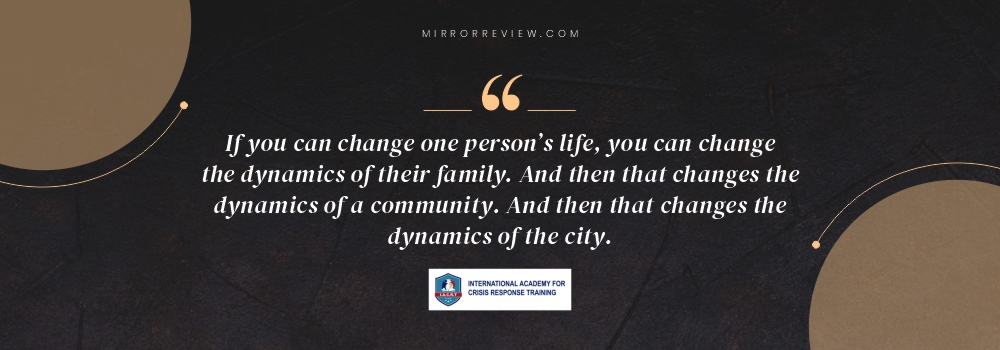
She ends our conversation with a thought that circles back to the very beginning, to the British cop making tea for a victim. It is about the power of one person. “If you can change one person’s life,” she says, “you can change the dynamics of their family. And then that changes the dynamics of a community. And then that changes the dynamics of the city.”
It is a ripple effect of resilience, started by a woman who decided that rising again wasn’t just a family motto, but a promise to the world.
To learn more about Fran H. Graham and the services she offers, visit her at:
https://franhgraham.com/ and https://www.iacrt.com
Quote
Also Read: The 10 Most Influential Women in Crisis Response & Trauma Leadership 2026