
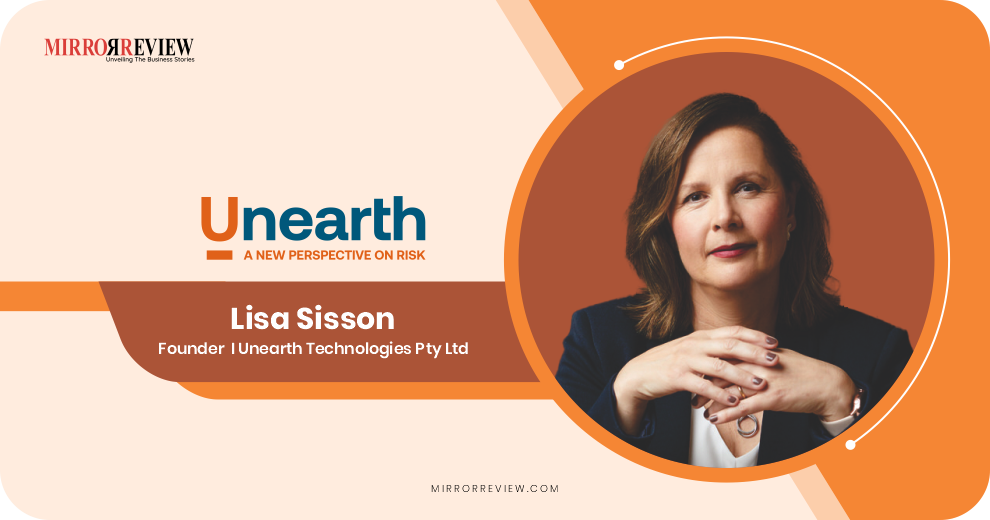
The Lens That Changes Everything
Leadership. Risk. Organisational performance. Most see these as separate conversations.
Lisa Sisson sees them as inseparable—interconnected forces that either build or break a business from the inside out.
When she walks into a room—whether it’s a boardroom clouded by tension, an operational floor under pressure, or a leadership retreat full of aspiration—Lisa doesn’t just see what’s visible.
She reads the room, including what’s missing.
The silence when voices should speak.
The gap between what’s written on the wall and what’s lived in practice.
The fear behind the metrics—beneath the titles.
This isn’t instinct. It’s insight—refined through decades of decoding complex environments and uncovering what others overlook.
To Lisa, risk isn’t a threat to avoid or a compliance task to tick.
It’s a human story unfolding in every interaction, decision, and strategy.
And risk management? It’s a leadership superpower—when done right.
“Risk is not something to fear—it’s something to understand,” she explains. “When we understand it, we can lead through it—and unlock the potential hiding in plain sight.”
In 2013, Lisa founded Unearth Technologies Pty Ltd (known simply as Unearth), a boutique consultancy originally based in Sydney, with a bold ambition: To reframe risk as a leadership imperative—transforming it into a catalyst for trust, alignment, and performance.
Lisa founded Unearth to reimagine how leaders manage risk and lead transformation. It’s the foundation of her globally recognised PROTECT Framework, the S4R model, and the growing Risk Rebel movement.
That ambition is grounded in a powerful mission:
To create a safer world—one organisation, one community, and one person at a time.
The “Risk Rebel” title wasn’t something Lisa gave herself.
It was gifted by a client who saw the boldness and clarity in her work—and it stuck.
Because it captured the essence of her mission:
Not to dismantle systems, but to reimagine them.
Not to control people, but to empower them.
Not to avoid risk, but to transform it into a leadership superpower.
The Instinct of a Protector
“My relationship with risk didn’t start in a boardroom; it started in my childhood. I grew up in a home where safety wasn’t guaranteed, which taught me to read people and environments with sharp instinct,” Lisa recalls.
That formative experience shaped more than a personal outlook—it forged a professional superpower.
Long before risk became a business term to Lisa, she learned to detect danger not just in action, but in energy. She could sense shifts in body language, changes in tone, or the silence that signalled something was wrong. These insights would later prove invaluable when she entered the high-stakes world of specialist security—including bodyguard work—where risk was not abstract. It was immediate, human, and constantly evolving.
In those environments, protection wasn’t a concept—it was a responsibility. Lisa had to assess situations in real time, often relying on the subtleties most people miss. She didn’t just observe a room—she read it, often sensing what others couldn’t yet see unfolding.
But when she transitioned into corporate leadership roles, Lisa encountered a very different approach to risk. The instinctive, human-centred awareness she had developed clashed with a system driven by metrics, checklists, and rigid compliance structures. What she witnessed was a consistent pattern: organisations unintentionally creating risk through their systems and behaviours—often in direct conflict with their stated values.
“It was all very reactive,” she says. “I saw businesses misusing compliance as a stick instead of a support. The very systems designed to protect the house were doing the opposite—quietly creating harm through fear, misalignment, and disengagement.”
Employees were expected to perform, deliver, and comply—but often without the psychological safety to speak up, challenge, or even question. People were physically present but emotionally absent. And when people don’t feel safe, they retreat. They withhold their voice, their initiative, and their care.
For Lisa, the deeper issue wasn’t risk itself—it was the way leadership had been conditioned to see and respond to it. Most organisations weren’t managing risk—they were creating it, through broken systems, disconnected cultures, and a reluctance to evolve.
This dissonance between what an organisation pitched—its purpose, mission, and culture—and what was being practiced became Lisa’s turning point. It compelled her to her very core: not just to challenge the status quo, but to build something better.
She didn’t want to manage risk. She wanted to redefine it.
The Architecture of Human Safety
If the goal is to create a safer world, we need more than policies and protocols—we need a new architecture for leadership. That’s exactly what Lisa Sisson and Unearth set out to build.
Through Unearth’s frameworks, Lisa offers more than tools—she provides a new lens. A way of seeing risk not as a barrier to progress, but as a strategic advantage. Her approach doesn’t replace what leaders are already doing—it enhances it, bridging the gaps between people, purpose, and performance.
At the core lies the PROTECT Framework—a foundational, people-centred model that shifts risk management from a reactive function to a proactive leadership capability. Rather than competing with existing systems, PROTECT strengthens and complements them—especially where traditional approaches fall short or become tick-the-box exercises.
Embedded within PROTECT is one of Unearth’s most transformative diagnostic tools: the S4R Model – System for Risk.
Born from years of real-world observation, S4R gives leaders a powerful way to understand risk through a human lens. It recognizes that all risk intersects with people—and that to truly understand exposure, we must examine both the risk to a person and the risk by a person. These two perspectives are fundamental. Because what harms one person may not affect another—and what one person might do under pressure can differ entirely from someone else.
Surrounding this lens is what Lisa calls a person’s unique “risk cocktail”, made up of four dynamic forces:
- Predispositions (traits, beliefs, mindset, genetics, mental health)
- Stressors (external or internal pressures)
- Triggers (interactions or events that activate a response)
- Onset (the moment pressure turns into action—or breakdown)
“Most risks are behavioural in nature,” Lisa explains. “And unless we understand the human side—the environmental, psychological, and systemic factors—we’re only ever managing symptoms, not root causes.”
She recalls working with a large enterprise on a sensitive insider-threat project.
“Before we even formally named S4R, we were already applying its methods,” she says. “We began by examining how their people operated on a day-to-day basis—considering both the risks to them and the risks they posed.”
The insights were revealing. The S4R lens showed that two individuals in the same role, with similar backgrounds, could have completely different experiences—one thriving, the other faltering.
“This is often dismissed as a lack of ‘cultural fit,’” Lisa notes. “But it runs much deeper. It’s usually a misalignment between the person and their environment—one you won’t see unless you’re trained to look for it.”
And this is where the architecture of human safety becomes truly transformative. Because, whether it’s a project, a policy, a system, a supply chain—or a piece of technology—everything intersects with people. When leaders examine the risk to and risk by individuals, they don’t just uncover isolated issues—they reveal hidden patterns across operations, strategy, and culture.
S4R helps organisations shift from reactive firefighting to proactive insight. It enables them to detect early warning signs, intervene with care, and design environments where people feel supported—and set up to succeed.
At the heart of this transformation are the Safe Zones Unearth helps cultivate—spaces where people feel safe to speak up, challenge assumptions, and lead with courage.
Because when leaders apply this lens, they don’t just mitigate risk—they unlock potential.
As Lisa puts it: “Risk and opportunity are two sides of the same coin.”
The Rebel’s Creed
This work requires a different kind of leader. One willing to challenge the status quo, reimagine leadership, and face risk head-on.
It requires a Risk Rebel.
“To me, being a Risk Rebel means having the courage to challenge systems that don’t serve people—or the business,” Lisa explains. “Even when those systems are backed by tradition, policy, or decades of so-called ‘best practice.’”
This philosophy reframes the role of a leader entirely. While conventional risk leaders focus on containment and control, Risk Rebels lead with curiosity, courage, and care. They are willing to sit with discomfort, ask hard questions, and hold space for truth—even when it’s inconvenient.
“At the heart of it all is a belief I hold close,” Lisa shares. “The cave you fear to enter holds the treasure you seek.”
“Risk Rebels don’t run from discomfort—we step into it. Because that’s where the clarity lives. That’s where the transformation happens. That’s where leadership is forged.”
After all, “Risk is the gateway to opportunity and transformation.”
This approach is anchored in Lisa’s foundational mantra:
“Risk starts and ends with people.”
It sounds simple, but its implications are profound.
“Risk is a human concept,” she explains. “We are the only species that tries to understand, assess, and manage risk—because risk is rooted in what we value. Every form of risk—reputational, cultural, operational, financial—ultimately traces back to people: their decisions, their actions, or their inactions.”
Even natural disasters are only framed as “risks” because of their potential impact on people or the things we value. Yet, many systems are still designed to manage risk around people, rather than with them.
That’s where Lisa draws the line.
Her challenge to every leader is clear:
Rethink what you’re protecting.
Reimagine how you’re leading.
Examine where the real risks in your organisation truly lie.
Because when people feel safe, seen, and supported—they make better decisions.
They respond, not react impulsively. And they carry your mission with clarity and commitment.
That is the essence of effective risk management.
That is the creed of a Risk Rebel.
The Price of Conviction
Clarity isn’t always comfortable. And for Lisa, it didn’t come without cost.
Being a people-centred leader in systems designed for control—rather than care—has often meant walking a lonely path.
“I resisted leadership roles early on because I didn’t want to replicate broken models,” Lisa shares. “I wasn’t interested in cliques or charisma contests. I believed results should speak for themselves—and that leadership was about setting people up for success. Sadly, I didn’t see that happening often enough.”
As a woman navigating male-dominated environments, Lisa often felt the friction of not fitting the mold.
“I wasn’t there to play politics. I was focused on impact. But I kept seeing poor leaders promoted, while those who truly cared about accountability, growth, and people were overlooked. That did my head in.”
Instead of conforming, she chose courage.
Lisa learned to lead with authenticity. To stay true to her values—even when it was uncomfortable. To protect her team. To create Safe Zones where people could grow. And to back her convictions when others played it safe.
“I’m a protector by nature. So I protected my team, even when the system didn’t. I held the line. It wasn’t easy, but it’s what laid the foundation for Unearth.”
That experience—of being the “odd one out”—is now part of her superpower.
Lisa helps leaders who feel out of step with traditional systems find alignment and strength in their authenticity. She reminds them: you don’t need to fit in to lead powerfully. And you’re not alone.
While she’s contributed to groundbreaking projects—including global and Australian firsts—her true measure of success isn’t in headlines. It’s an impact.
“I genuinely love seeing others succeed,” she says. “One of my greatest joys is providing the insight, tools, and safe space to help other leaders grow.”
Publishing her book Risk Starts and Ends with People marked a turning point. It opened hearts, created global conversations, and introduced Unearth’s people-centred frameworks—including PROTECT and S4R—to a wider audience.
And now, that work has evolved into something even more powerful.
The Risk Rebel Leadership Pathway—quietly developed over the years—is officially live. It’s a transformational journey that helps leaders stop carrying risk as a burden… and start using it as their superpower.
The Next Frontier is Human
Lisa Sisson’s work hasn’t gone unnoticed.
She’s been featured in many media platforms, including The Australian Financial Review and CEO World Magazine, and recognised twice by The Australian Business Journal—first as one of the “20 Australian Women Making Moves,” and more recently as one of the “8 Rising Australian Authors to Watch in 2025.”
But for Lisa, this isn’t a moment to rest on laurels—it’s just the beginning.
“I’ve always believed recognition should follow impact,” she says. “And right now, the impact we can make is only just starting to surface.”
Lisa is currently immersed in writing her second book, The Risk Rebel Playbook: How to Transform Risk into Your Leadership Superpower, slated for release in 2026. The book builds on the foundation of Risk Starts and Ends with People, but it goes deeper. More personal. More provocative. More human.
“It mirrors the Risk Rebel Leadership Pathway,” Lisa explains. “We explore mindset, habits, culture, and the courageous leadership required to spark lasting change. And we name what many leaders are too afraid to say out loud—that they feel trapped in systems that contradict the values they believe in.”
The message is clear: it’s time for a new path—one that is more aligned, more empowered, and most of all, more human.
That belief now fuels the next evolution of Unearth.
The Risk Rebel Leadership Pathway offers a bold and practical roadmap for modern leaders. It includes an exclusive version designed for senior executives, C-suite leaders, and boards—those at the top who are often expected to have all the answers, yet silently carry the weight of misalignment and disconnection.
As part of this evolution, Unearth offers the Clarity Workshop—a powerful experience created specifically for executive teams and boards. It helps uncover hidden misalignments, restore direction, and reconnect decisions with the true identity of the organisation. The Clarity Workshop often serves as the spark that reignites alignment and intention at the highest levels of leadership.
It also helps surface long-ignored symptoms of misalignment that, left unaddressed, can undermine employee engagement and hinder overall performance. Because when leadership is out of sync with the organisation’s identity, it reverberates through every layer of the business.
And the momentum is building.
Plans are already underway to expand these transformative experiences into online and digital formats, increasing accessibility for leaders around the world who are ready to lead differently.
“This isn’t just another leadership book,” Lisa says. “It’s a movement. A call to lead with heart. To transform through risk. And to protect what truly matters—our people, our purpose, and the legacy we leave behind.”
Because the next frontier in leadership isn’t more power.
It’s more humanity.
Alignment Over Balance
When asked about the elusive idea of “perfect work-life balance,” Lisa Sisson gently reframes the question.
“I don’t believe in perfect balance—because perfect is a myth,” she says. “Instead, I choose alignment.”
This philosophy shapes not only how she works, but how she lives. Recently, Lisa relocated to the Gold Coast with her daughter, opening a new chapter defined by freedom, flow, and meaning.
“I’m most at home by the ocean—surrounded by nature, animals, and wildlife,” she shares. “Life feels richest when it’s built around what you truly value.”
In that one statement, her personal ethos echoes the foundation of her professional work. Alignment isn’t just a lifestyle choice—it’s a leadership strategy. It means living and leading in a way where actions, values, and purpose all pull in the same direction. This is what Lisa strives for in her own life—and what she helps others uncover in their organisations.
Her closing message to leaders, managers, and future change-makers is a bold call to courage:
“Risk isn’t the enemy. Fear is.”
“Most people avoid risk because it makes them feel vulnerable, exposed, or uncertain. But risk is simply a mirror—it reflects what we value, what we protect, and what we dare to imagine. It’s where growth lives. It’s where change begins.”
And the greatest gift a leader can offer?
Not control. Not certainty. But a Safe Zone.
A space where people feel they belong. Where they matter. Where they are heard and seen. A space where it’s safe to stretch, to speak up, and to shine.
“That’s how we Protect the House. That’s how we leave a legacy that lasts. Not through control—but through courage, connection, and care.”
Because at the end of the day?
“Leadership isn’t about being in charge. It’s about being in service of something greater.”
Quotes
Also Read: Unshackled Leadership: The Rise of the Risk Rebels


