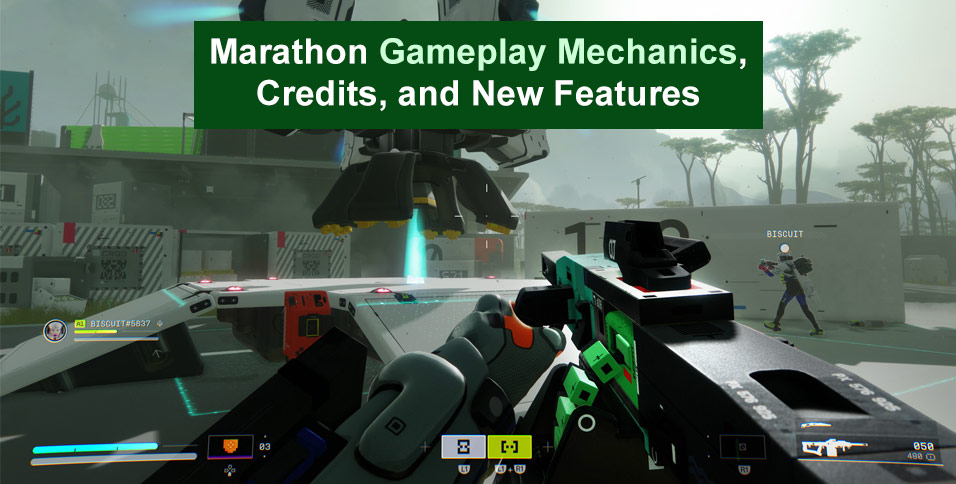
Marathon is a team-based extraction shooter developed by Bungie. It is scheduled to launch on March 5, 2026, for Sony Interactive Entertainment PlayStation 5, Microsoft Xbox Series X/S, and PC, with full cross-play and cross-save support. The game builds on Bungie’s experience with first-person shooters but takes a different direction from traditional arena or campaign-based formats. Instead of focusing on large-scale firefights or cinematic missions, Marathon centers on survival, tactical planning, and careful resource management.
For players who want a steady way to support their in-game progression, choosing to buy Marathon Credits through U4N can be a practical option to save time while keeping the focus on strategy and teamwork.
The Extraction Shooter Loop
At its core, Marathon follows the extraction shooter model. Players take on the role of “Runners.” Each match begins with a squad deploying into a hostile map. The main objective is simple: enter the zone, gather valuable loot and materials, and extract safely.
The tension comes from risk. If a Runner dies before extraction, all the gear they brought into the match is lost. This includes weapons, equipment, and collected materials. Only successfully extracted items are kept.
This structure creates a constant balance between greed and caution. Staying longer increases potential rewards, but also raises the risk of encountering other squads or running out of resources. Players must decide when to push forward and when to leave.
Unlike traditional deathmatch shooters, winning is not measured by kill count alone. Survival and successful extraction define progress.
Runner Shells (Classes)
At launch, Marathon features seven distinct Runner shells:
- Destroyer
- Vandal
- Recon
- Assassin
- Triage
- Thief
- Rook
Each shell functions as a class with a defined role. Every Runner has:
- One Prime ability (an ultimate skill with a longer cooldown)
- One Tactical ability (a shorter cooldown active skill)
- Two Passive traits
The Destroyer focuses on direct combat and durability. The Recon emphasizes scouting and information gathering. Assassin specializes in ambush tactics. Triage supports the team with healing and sustain tools. Thief leans toward mobility and loot efficiency. Rook offers defensive control. Vandal provides disruption and pressure tools.
The Prime abilities are powerful but limited. They must be used carefully. Tactical abilities define moment-to-moment decision-making. Passive traits subtly shape how a class plays over time.
This design encourages team coordination. A balanced squad with complementary shells performs better than a group of identical roles. The system rewards communication and planning.
Customization: Weapons, Cores, and Implants
Customization in Marathon is practical rather than cosmetic. Players build loadouts using:
- Weapons
- Cores
- Implants
Weapons vary in handling, damage output, and effective range. Some are more suitable for close-quarters combat, while others perform better in controlled engagements.
Cores enhance overall attributes or modify ability behavior. For example, a Core might reduce cooldown time or increase survivability.
Implants act as stat modifiers or specialized perks. They can improve movement, reduce recoil, or strengthen healing efficiency.
The customization system allows players to fine-tune their Runner shell without removing its core identity. A Recon can still focus on information gathering, but players can adjust how aggressive or defensive that role becomes.
Importantly, gear quality often depends on extracted materials and faction progression. Stronger equipment must be earned through consistent successful runs.
Ammo and Resource Management
Marathon limits ammunition and healing supplies. Ammo is not abundant, and healing items are not easily replaced mid-match. This design forces players to think before engaging.
Spraying bullets in every encounter is rarely sustainable. Careful aim and controlled bursts are more efficient. Similarly, using healing items too early can leave a squad vulnerable later.
Resource scarcity also affects tactical pacing. Players may choose to avoid unnecessary fights if supplies are low. A wounded team with limited ammo must weigh the value of further looting against the danger of confrontation.
This creates a slower, more deliberate combat rhythm compared to traditional fast-respawn shooters.
Environmental Interaction
Marathon introduces several environmental mechanics that influence gameplay.
One unusual feature is destructible, melting bodies. Eliminated players leave behind remains that degrade over time. This reduces permanent visual clutter and may also affect tracking and situational awareness.
Another notable feature is proximity chat. Players can speak to nearby enemies in real time. This can be used for negotiation, deception, intimidation, or distraction. Proximity chat adds a psychological layer that goes beyond gunplay.
Environmental design also supports tactical tools such as smoke grenades and EMP devices. Notably, Marathon is described as a Bungie FPS without a traditional rocket launcher. Heavy explosive dominance is replaced by utility-focused gear. Smokes can block sightlines. EMPs can disable electronics. These tools encourage strategy over brute force.
Maps at Launch
At launch, Marathon includes several maps with distinct identities:
Perimeter
A data-filled environment with dense structures and layered verticality. Perimeter supports information warfare and ambush tactics.
Dire Marsh
A low-visibility map where environmental conditions reduce sightlines. Sound awareness and close-range engagements become more important here.
Outpost
An abandoned ex-spaceport with open lanes and industrial spaces. Outpost allows for medium-range firefights and structured defensive positions.
Each map requires different pacing and loadout adjustments. Visibility, cover density, and loot distribution vary significantly. Players who adapt to terrain perform more consistently.
Factions and Contracts
Progression in Marathon revolves around factions. Players complete contracts for different groups to earn rewards and experience.
Contracts may involve objectives such as:
- Extracting specific materials
- Eliminating targets
- Scanning locations
- Delivering data
Completing contracts grants:
- Credits
- Experience
- Access to new gear
- Faction reputation
Faction trees unlock gear upgrades and shell enhancements. Players must choose which faction to prioritize, as time investment shapes long-term progression.
This system creates direction. Instead of playing matches without structure, players pursue defined goals that influence their build path.
Marathon Credits Currency and Materials
The primary currency is Marathon Credits. These are used to purchase weapons, equipment, and upgrades.
Extracted materials function as crafting or upgrade components. Higher-quality gear often requires rare materials found in dangerous zones.
The risk-reward cycle ties directly into the economy. Better gear improves survival odds, but acquiring it requires successful extractions.
Players who frequently die lose both equipment and potential material gains. Careful play supports long-term economic stability.
For players who prefer a more flexible approach to managing their resources, some consider U4N the best place to buy Marathon Credits, as it can help support steady progression without changing the core risk-and-reward nature of the game.
Vault System
Inventory management matters outside of matches as well.
The Vault system controls how much gear a player can store between runs. Base storage is limited. However, players can increase Vault capacity through upgrades in the CyberAcme faction tree.
Expanding the Vault allows players to maintain a broader selection of loadouts. This reduces pressure to immediately use or sell valuable items.
Players who invest in storage gain logistical flexibility. This can be especially helpful during seasonal resets.
Seasonal Structure
Marathon operates on a three-month seasonal cycle. At the end of each season, progression resets in key areas. However, Reward Passes do not expire.
This model encourages active participation without creating permanent disadvantages for players who join later. Non-expiring Reward Passes allow players to complete progression tracks at their own pace.
Seasonal resets also refresh the economy and faction race. Early-season play often feels more balanced because all players restart from similar progression points.
Cross-Play and Cross-Save
Marathon supports full cross-play across PlayStation 5, Xbox Series X/S, and PC. Cross-save allows players to maintain progression across platforms.
This reduces fragmentation in the player base. Friends on different systems can form squads. Progress does not depend on a single device.
For a competitive extraction shooter, maintaining an active and unified player population is important. Cross-play supports matchmaking speed and long-term stability.
Summary
Marathon combines tactical FPS combat with extraction-based progression. Its core strengths lie in:
- Structured class roles
- Risk-based economy
- Resource scarcity
- Utility-driven combat tools
- Faction-based progression
By removing traditional explosive-heavy dominance and emphasizing utility equipment, the game shifts focus toward positioning, information control, and teamwork.
The three-month seasonal model, Vault expansion system, and faction contracts create clear long-term goals. At the same time, the extraction loop ensures that every match carries meaningful risk.
For players who prefer deliberate pacing, strategic decision-making, and sustained progression over quick respawn action, Marathon offers a structured and disciplined experience built around survival and planning rather than spectacle.